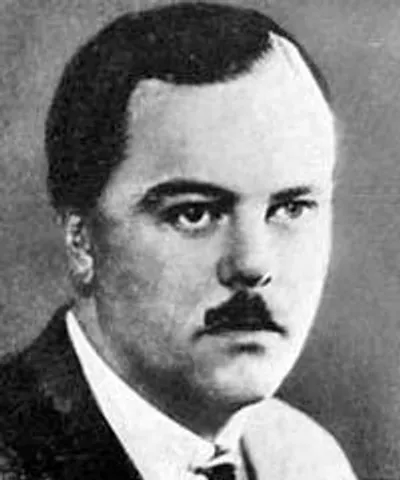
Golden Age of Mystery
Anthony Berkeley Cox wrote mystery novels primarily under the pen names Anthony Berkeley, and Francis Iles. He also founded The Detection Club, the preeminent members only club for mystery writers. This elite London Club still exists today. His most noted book, The Poisoned Chocolates Case (1929) continued the evolution of the crime novel. Like Trent’s Last Case, The Poisoned Chocolates Case featured an anti-hero detective, Roger Sheringham, who was fallible (and irritable). The Poisoned Chocolates Case centers around several characters suggesting solutions to a mysterious death, all of which are perfectly plausible. Cox is unusual in that in Chocolates and some of his other books, the subject matter is sexually suggestive. Although tame by today’s standards, it was unusual for the time. His later Iles books address the psychology of crime detection. Cox ceased mystery writing in 1939 and lived another 32 years reviewing crime novels as Francis Iles. Anthony Berkeley Cox’s (as Francis Iles) book Before the Fact (1932) was made into the Movie, Suspicion by Alfred Hitchcock.
Years Active: 1925-1939
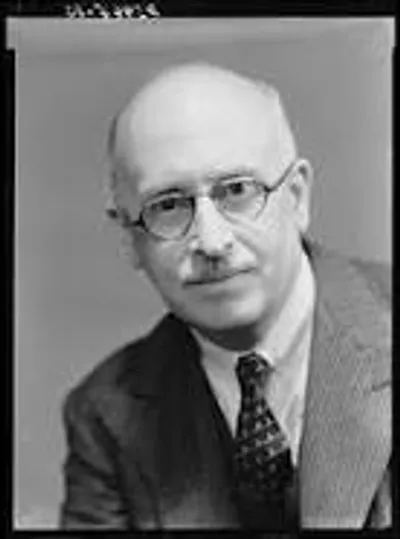
Freeman Wills Croft (1879 - 1957)
Freeman Wills Croft was a mystery writer with some 35 books, numerous short stories, plays and radio programs to his credit. Mr. Croft was an engineer by trade and oversaw construction of various railroad projects. His profession often figures in his works with railway timetables and detailed description of highly technical machines or processes often involved in the story. He is best known for his Inspector French series. Crofts is included in the “hum drum’ school of writers and admittedly large section of his books go by without very much happening. I read The 12:30 From Croydon (1934), Croydon being the London airfield and not, in this case, a train station. This book was somewhat of an experiment since it was an example of an “inverted” plot and reversed the normal whodunit order. In The 12:30 from Croydon, the murder occurs in the first chapter, and the murderer is revealed in the second chapter. The balance of the book deals with the facts leading up to the murder and, of course, how the murderer is caught. Croft’s detailed description of the investigating detective’s methods make him a progenitor of the police procedural genre.
Many of Freeman Wills Crofts books have recently become available on ebooks so I read The Cask (1920). It is was his first and widely recognized as one of his best books.
Years Active: 1920 – 1957
Available: Apple IBooks, Google Play Books, Amazon
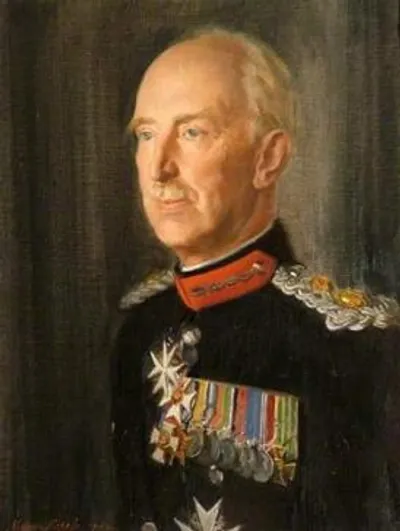
Henry Wade (1887 -1969)
Major Sir Henry Lancelot Aubrey-Fletcher wrote under the pen name of Henry Wade. He wrote 20 novels and numerous short story colections but is chiefly know for his 5 Inspector Poole mysteries. Poole was an Oxford educated upper class young man when, against his families wishes, he joins the London Metropolitan Police with the goal of becoming the head of Scotland Yard. I read Wade’s first novel The Duke of York’s Steps (1929). Having served in World War I, Wade (Aubrey-Fletcher) made extensive use of the post war period and atmosphere as well as the plight of returned soldiers. I found the book well written even if the method of murder is a bit far fetched.
An interesting interplay in the book is the discouragement of this well born young man from remaining a policeman by both his family and many of his fellow officers in the police force! Aubrey-Fletcher went on to serve with distinction in the second World War.
Years Active: 1926-1957
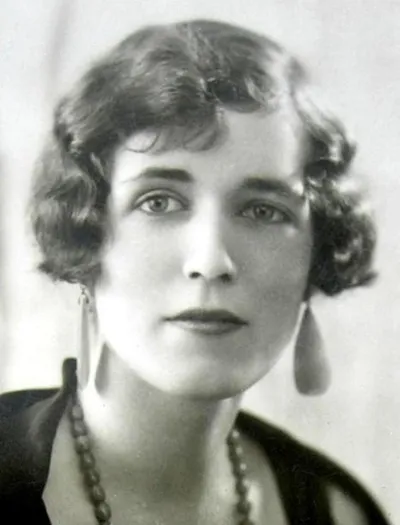
Georgette Heyer "Hair" (1902 -1974)
Georgette Heyer (married name Rougier) was another prolific writer of more that fifty books, twelve of which could be categorized as mysteries or thrillers. Heyer featured two policeman, Superintendent Hannasyde and Inspector Hemingway. She also wrote three stand alone mysteries. Death in the Stocks (1935), is often mentioned as Heyer’s best mystery and it makes some lists as one of the ten best golden era books. Heyer had a light approach to her mysteries frequently featuring upper class chracters and questions of inheritance.
Georgette Heyer was much more famous for her historical romances and she is credited with inventing the Regency romance. In an era when women had few outlets for producing income, Heyer was apparently by choice the primary breadwinner for her extended family including her husband, a son, and two brothers. Despite selling over 100,000 books a year, Heyer often struggled financially given the heavy tax scheme in the UK. She also suffered from plagiarism of her work even by some writers who would later become household names. Georgette Heyer’s mysteries probably served as diversions from her romance novels but they are never the less, well done, and one cannot but admire Heyer herself for her many accomplishments.
Years Active: 1921 – 1974

Annie Haynes (1865 - 1929)
Annie Haynes is a perfect example of the resurrection of reputation due to the availability of ebooks. In the not too distant past, only handful of people were ever known to have even read an Annie Haynes book and no known photograph or portrait of her exists. Haynes grew up the daughter of a gardener to an estate and was therefore familiar with British Gentry, a subject that would be a recurring theme in her books. Haynes lived most of her adult life with crippling Rheumatoid Arthritis which severely restricted her activities. Moving to London, Haynes lived with her great friend, Ada Heather-Bigg and both were active in early feminist circles. Heather-Bigg was among the first women to attend college classes with males and upon her death, she endowed the Ada Heather-Bigg Prize in Economics at University College London.
Miss Haynes wrote twelve novels published by The Bodley Head, the same firm that published Agatha Christie’s early works. For someone whose works almost disappeared, Haynes was apparently well known for her mysteries during her lifetime. Two of her recurring characters were detectives Furnival and Stoddart. Despite having very limited mobility herself, her works had varied locales and rich descriptions. Perhaps she lived vicariously through the travels of her protagonists. I enjoyed the four Haynes books that I have read and I think I can say without spoiling any plots that there is usually a really bad man involved.
Years Active: 1923 – 1929
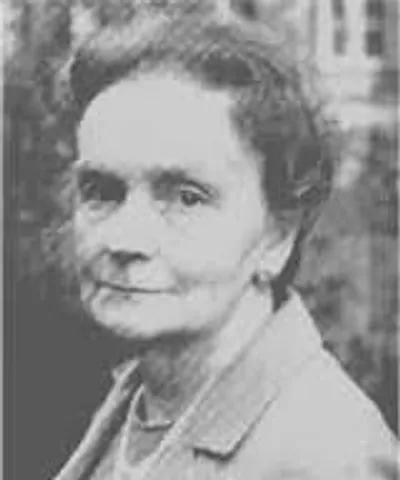
E. C. R. Lorac (1894 -1958)
E.C.R. Lorac is the pen name for Edith Caroline Rivett, a prolific author of golden age mysteries. OK, first the name. E.C.R. are her initials and Lorac is Carol spelled backwards. Lorac was a member of the Detection Club, so we can infer from that membership that she was judged by her peers to be among the very best of her craft. She wrote 48 novels under Lorac and another 23 under the name Carol Carnac. Lorac’s detective was Chief Inspector Robert Macdonald usually assisted by Detective Inspector Reeves. Writing as Carnac, her detectives were at various times Ryvet or Rivers assisted by Inspector Lansing. Lorac/Carnac is known for simple, straight forward mysteries with lots of characters (some not so well defined) and endings where the guilty get caught and punished. I read Fire in the Thatch (1946) and altough there were many characters from all corners of England, I found the characters were well defined enough as not to be confusing.
Rivett never married and died in a nursing home. After publishing 71 novels, her estate at death was valued at 10,000 pounds or around $300,000 in todays dollars. That is a lot of money in a world where women were excluded from Business, Law or Medicine and women’s salaries averaged less than $2,500 (in today’s dollars) a year.
Years Active: 1931 – 1958
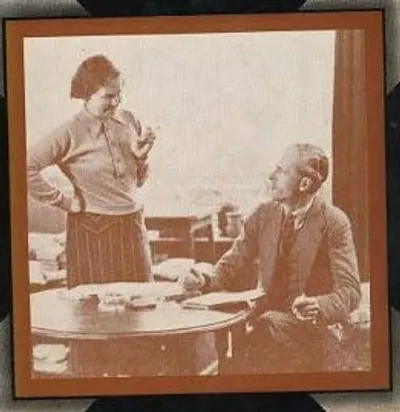
G.D.H. and Margaret Cole (1889/1918-1959)
The Coles were a husband and wife writing team, somewhat unusual for the Golden Era. There is some disagreement as to who wrote what, but I suspect that their relationship was much like that of the Cole’s Superintendent Wilson of Scotland Yard. Said to be one of the most celebrated Detectives in England but, “To his friends he would add that all his best work was due to his wife. He would tell her all about his most difficult cases and she would never fail, he said, to give him just the hint he needed to arrive at the truth.”
The Coles were ardent socialists and it is understandable that their best known work would be The Death of a Millionaire (1925). Predictably, the peerage, businessmen and the police are treated rather harshly. The most sympathetic character leaves the unseemly world of business and returns to the hallowed halls of academia exactly where G.D.H. Cole happened to reside in real life. The mystery itself is extremely entertaining and well written with more humor that one would expect. I enjoyed The Death of a Millionaire and look forward to reading more of the Coles’ work but the books are hard to find. I wonder what G.D.H. Cole would think of the Capitalist system that takes one of his 1950’s paperbacks that originally cost a Shilling and sixpence and now sells it for $17.
Two groups singled out in Millionaire as being persecuted by the police were the Socialists and the Communists. The Coles’ have one falsely accused Bolshevik proclaim, “a communist will fight to the death for freedom but we do not do murder.” That would be somewhat surprising to the 20 million people that Joseph Stalin killed in pograms, gulags and executions, but one of the most essential elements of being a Socialist is a bad memory.
Years Active: 1923-1948
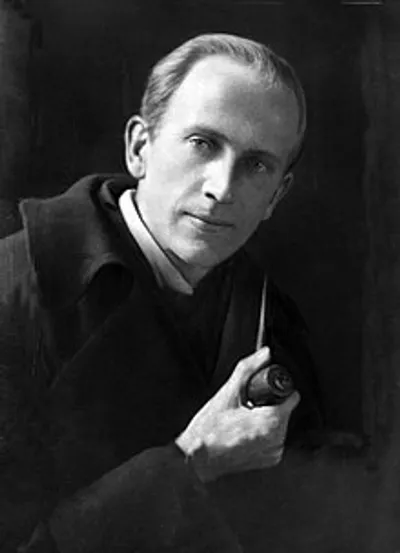
A.A. Milne (1882-1956)
A prolific author of plays, poems, magazine stories, and newspaper articles but best known for his books about a teddy bear named Winnie-The-Pooh. The origins of the Pooh stories were the stuffed animals loved by his son, Christopher Robin Milne. The Red House Mystery, Milne’s only venture into the mystery genre was written because his father loved murder mysteries. Written in 1922, the book was a best seller. Evidently the public demand for the English murder mystery was well established at the dawn of the Golden Age. The Red House Mystery has many of the essentials of a traditional murder mystery; a country house, an inheritance, an amateur sleuth, Gillingham, who imitates Holmes and a friend, Mr. Beverly, who imitates Dr. Watson. The plot of The Red House Mystery is well laid although the ending strains credulity. Milne seems to have wanted to write more Gillingham/Beverly books but was discouraged by his publisher.
One might not have expected it of a writer of children’s stories, but Milne was a war hero. He volunteered for the Great War and was wounded at the Somme. Invalided out, he spent the balance of the war working for the intelligence service. When World War II came, Milne volunteered again and was a Captain in the British Home Guard.
Years Active (Mystery): 1922
Book is Available on Apple iBooks
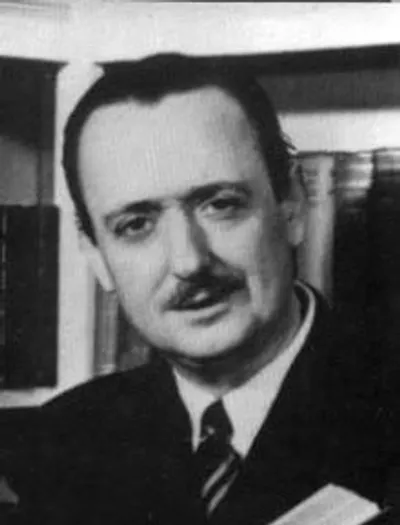
John Dickson Carr (1906-1977)
This site is arbitrarily limited to writers from the United Kingdom with the single exception of John Dickson Carr. Born in Pennsylvania and educated at Haverford College, Carr moved to England in the 1930s and married Clarice Cleaves, an Englishwoman. Carr remained in England for 18 years and most of his books were traditional golden age mysteries with English settings. Carr’s stature was such that he is one of only two Americans ever inducted into the Detection Club. Famous for his “locked room” plots, Carr’s most famous sleuth was Dr. Gideon Fell but he also wrote books featuring Sir Henry Merrivale. The Fell mystery, The Hollow Man written in 1935 (also known as Three Coffins) is universally included in the lists of Ten Best Golden Age Mysteries. One Chapter of The Hollow Man has actually been published as a standalone treatise on locked room mysteries. Imagine my chagrin, when upon reading The Hollow Man, I found it indecipherable. One of the hallmarks of John Dickson Carr is that you have to pay attention to every detail of every paragraph. Unfortunately, that is not the way I pleasure read mysteries and that may explain my reaction. I did lend the book to a friend, who is a published author and she came to a conclusion similar to mine. Not to be undone, I read another Carr book, Scandal at High Chimneys (1959), and enjoyed it very much. An unusual (for Carr) historical mystery, it had everything you could ask for in a period mystery; a beautiful heiress, a country house, and a wastrel English Lord. John Dickson Carr wrote over 70 novels, some under the pseudonyms Carter Dickson, Carr Dickson, and Roger Fairbairn as well as under his own name. He also wrote several plays, contributed to Ellery Queen’s Mystery Magazine and had many books and short stories adapted for radio and television.
Years Active: 1930-1970
Some Books Available on Apple iBooks
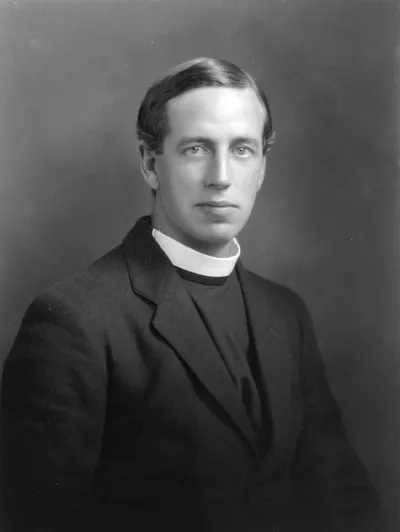
Ronald Knox (1888-1957)
Father Ronald Knox was a brilliant Classics scholar at Eton College and Balliol College, Oxford. Rather than pursue education, Knox sought a career in the church. First as an Anglican priest and then as a priest in the Roman Catholic Church, a change which caused his strongly Anglican father to disinherit him. So, it was to earn extra income that led Knox to mystery novels, although he was already an enthusiastic puzzle solver. Father Knox wrote six mystery novels, and several short stories in addition to religious texts and sermons. An early member of the Detection Club, Knox wrote chapters in three collaborative books that the club published to generate funds.
Knox’s detective was Miles Bredon, an insurance investigator for the improbably named Indescribable Insurance Company. Knox has a light, almost comic approach to mystery which is very appealing. Ironically, since Knox was never married, Bredon is often assisted by his wife, whose character and relationship is altogether believable. I read The Body in the Silo (1933) and it is very much a classic Golden Age Country House Mystery. An admirer of Chesterton, Knox utilizes a paradoxical ending to have an evil person accidentally killed after the wrong person was killed on purpose. I hope this tease will invite you to read a Ronald Knox book. You will enjoy it if you do.
Knox was a proponent of “fair play’ in mystery novels where the reader has as much information needed to solve the mystery as the writer. For instance, the murderer cannot be someone who has not been introduced previously. Knox codified “fair play” with his Decalogue, ten rules of Detective Fiction. Some are whimsical, “No Chinaman must figure in the story.” Other rules are more germane, “No accident must ever help the detective,” or “the detective must not himself commit the crime.” Of course, his fellow Detection Club members delighted in violating the rules including famously, Agatha Christie.
Years Active: 1925-1947
eBooks Available on Amazon
Francis Duncan (1918-1988)
Golden Age mystery writer Francis Duncan was himself the source of a modern mystery. Specifically, who was Francis Duncan? In 2016, a new edition Christmas mystery, Murder for Christmas by Francis Duncan was as surprise best seller. Originally published in 1949, the publisher had no record of an author named Francis Duncan. A newspaper appeal was read by his children who revealed the author as William Underhill. As an aside, William Underhill seems just as suitable a name as Francis Duncan for a mystery author, but there may have been personal or professional reasons for the pen name.
Underhill wrote 20 mystery novels 5 of which featured gentleman sleuth, Mordecai Tremaine. A Murder for Christmas has Tremaine staying at a country house for Christmas where Father Christmas (or one of them) is killed. If you are a fan of Gervase Fen, then you will like Mordecai Tremaine. Like Fen, Tremaine has an almost whimsical approach to detection. Duncan’s characters are extremely well developed and like many late Golden Age mystery authors psychological overtones are employed. Murder For Christmas deserves a place among the best “holiday” mysteries and Duncan himself deserves wider recognition.
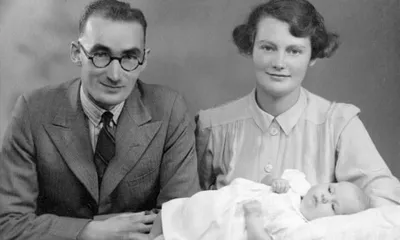
Francis Duncan is one of the few cases where we know the financial impact of mystery writing. Duncan’s daughter recalls that her father received 600 pounds (approximately $22,000 today) for a novel which augmented his meager salary at the time. The associated picture shows a prosperous Underhill family, a family possibly only afforded by his 4 published mysteries to date.
Years Active: 1936-1959
R.A.J. Walling (1869–1949)
R.A.J. Walling (1869–1949) was an English journalist who began writing detective novels late in life, producing nearly 30 Golden Age mysteries between 1927 and 1949. Best known for his series featuring the urbane insurance investigator Philip Tolefree, who solves intricate whodunits with sharp logic and understated wit, Walling’s books blend clever plotting, atmospheric settings, and classic English country house crimes. Titles like The Fatal Five Minutes (1932), The Corpse with the Grimy Glove (1938), and The Doodled Asterisk (1943) showcase his knack for baffling puzzles and engaging, gentlemanly detectives, earning him a dedicated following among fans of traditional British crime fiction.
Victor L. Whitechurch
Victor L. Whitechurch, an English clergyman and author active in the early 20th century, crafted engaging mysteries that often blended clever plotting with realistic detail. He is best remembered for creating Thorpe Hazell, one of literature’s earliest railway detectives—an eccentric, vegetarian amateur sleuth who solves crimes using his expert knowledge of trains, timetables, signaling, and rolling stock. These stories, collected in Thrilling Stories of the Railway (1912) and similar volumes, feature ingenious puzzles set on trains, platforms, and tracks, including tales like “The Affair of the Corridor Express.” Whitechurch also wrote standalone crime novels such as The Templeton Case (1924), The Crime at Diana’s Pool, Shot on the Downs, and Murder at the Pageant (1931), which showcase careful attention to police procedure, atmospheric English settings, and fair-play detection. His work helped bridge the Edwardian thriller tradition with the more methodical Golden Age style that followed.
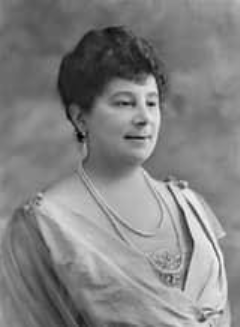
Baroness Orczy
Baroness Orczy, best known for her swashbuckling Scarlet Pimpernel series, also made significant contributions to early detective fiction and mysteries with several innovative short-story collections. Her most influential mystery character is the unnamed, eccentric armchair detective known as the Old Man in the Corner (or Teahouse Detective), who appears in stories starting in 1901. Sitting in a London tea shop, he obsessively ties and unravels string while recounting real crimes to a young female journalist and brilliantly deducing the true culprits through logic alone—often in cases the police have failed to solve. Orczy also created one of literature’s earliest prominent female detectives in Lady Molly of Scotland Yard (1910), a clever, respected Scotland Yard investigator who relies on intuition, disguise, and sharp wits to crack cases. These works blend clever puzzles, Edwardian atmosphere, and pioneering character archetypes, helping pave the way for later Golden Age detective fiction.
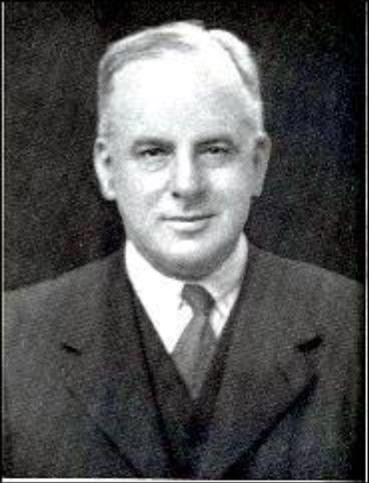
Anthony Wynne
Anthony Wynne (pseudonym of Robert McNair Wilson, 1882–1963), a Scottish-born doctor and author, was a prominent Golden Age writer celebrated for his ingenious locked-room mysteries and impossible-crime puzzles. His long-running series features Dr. Eustace Hailey, a Harley Street specialist in mental diseases and one of the era’s most cerebral amateur detectives, who applies psychological insight, medical knowledge, and razor-sharp logic to unravel baffling cases. Wynne’s novels, including standout titles like Murder of a Lady (1931)—a classic locked-room stabbing in a gloomy Scottish castle—and others such as The Mystery of the Evil Eye (1925), The Horseman of Death (1927), The Red Scar (1928), and Emergency Exit (1933), are known for atmospheric settings, fair-play clues, supernatural-seeming elements that receive rational explanations, and meticulously constructed plots that often hinge on technical or psychological impossibilities. His work represents some of the finest examples of the pure puzzle tradition in British detective fiction.
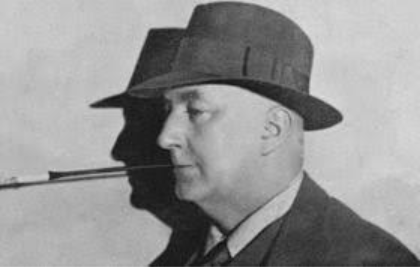
Edgar Wallace
Edgar Wallace, dubbed the “King of Thrillers,” was a hugely prolific British author whose mysteries and crime novels dominated the early 20th century. Between roughly 1905 and his death in 1932, he churned out over 170 novels and hundreds of short stories filled with fast-paced plots, master criminals, secret societies (like the Crimson Circle or Four Just Men), clever Scotland Yard inspectors, and eccentric amateur sleuths such as the mild-mannered J.G. Reeder. His works blend breathless action, clever twists, blackmail schemes, murders, and a touch of melodrama, often featuring colorful villains and morally ambiguous anti-heroes. Many of his stories were later adapted into a popular 1960s British B-movie series called the Edgar Wallace Mysteries, which updated his tales into compact, noir-flavored thrillers. Only contribution during short Hollywood career was concept and title for movie King Kong dying shortly thereafter.
After The Golden Era
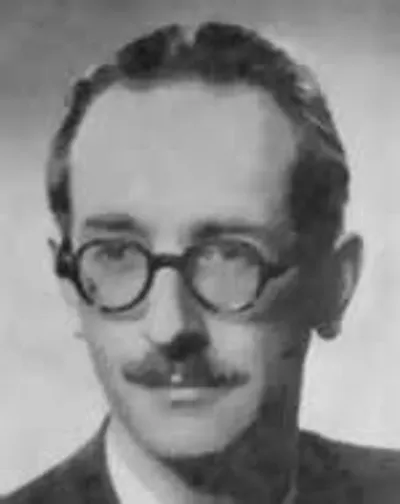
Colin Watson (1920-1983)
After the Golden Era, and to the present day, mystery novels have seen ever more graphic crime scenes and sexually explicit narratives. A good example of the early transition would be the novels of Colin Watson. Most of Watson’s novels have underlying sexual themes. Set in the small town of Flaxborough, Watson’s protagonist, Inspector Walter Purbright and major character, the con artist Miss Lucilla Teatime were either investigating these more prurient crimes or in the case of Miss Teatime participating or commenting on them in the strongest language possible. Coffin Scarcely Used (1958) is a good introduction to Watson’s work. Inspector Purbright investigates a series of bizarre murders and the underlying criminal conspiracy. Set in 1950’s postwar England, this novel and practically all mystery novels are good reflections of life at the time. Watson seamlessly utilizes the advanced technology (relative to the Golden Era) of communications and transportation into the plot. For those looking for a transitional work from the Golden Era, one would find great enjoyment in the works of Colin Watson. In 1971, Watson wrote a critique of crime fiction called Snobbery with Violence. In the book, Watson among many other things, makes the case that crime fiction from Sherlock Holmes to James Bond is derivative of prior generations.
In 1978, BBC adapted four of Colin Watson’s Flaxborough novels for television as a series called Murder Most English. These well done programs starred Anton Rodgers as Inspector Purbright and Brenda Bruce as Lucilla Teatime. Murder Most English cannot be found on YouTube or Prime Video but the CD set can be bought used for $10-$12. The CD’s themselves have been reformatted from VHS and this improvement causes some minor glitches while viewing.
Years Active: 1958-1971
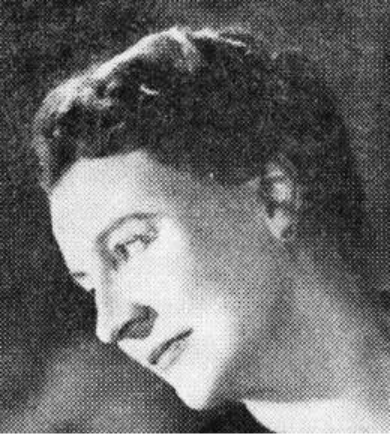
Christianna Brand
Christianna Brand was a prominent British Golden Age mystery writer (1907–1988), celebrated for her clever plotting, psychological insight, and intricate “impossible crime” puzzles. Her most acclaimed works feature the shrewd Inspector Cockrill, appearing in novels like Heads You Lose (1941), the wartime hospital classic Green for Danger (1945)—adapted into a highly regarded film—and standout entries such as Death of Jezebel (1948), Fog of Doubt (also known as London Particular, 1952), and Tour de Force (1955). Brand’s mysteries blend sharp wit, fair-play clues, and vivid character dynamics, earning her comparisons to Agatha Christie and John Dickson Carr among enthusiasts of classic detective fiction.
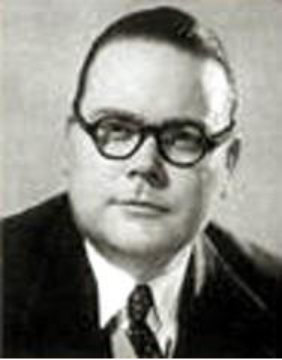
Clifford Witting (1907–1968)
Clifford Witting (1907–1968) was an English mystery writer of the Golden Age tradition, best known for his 16 detective novels published between 1937 and 1964. Educated at Eltham College in London, he worked as a clerk at Lloyds Bank from 1924 until 1942, before serving in the Royal Artillery and Royal Army Ordnance Corps during World War II. His debut, Murder in Blue (1937), introduced series detectives Inspector Harry Charlton and Sergeant (later Inspector) Peter Bradfield, who featured in most of his books. Witting’s works blended classic whodunit elements with witty prose, local color, clever plotting, and occasional experimental twists, such as surprise victims or inverted structures. Notable titles include Measure for Murder (1941), praised for its theatrical setting, and Catt Out of the Bag (1939). Though admired by critics like Jacques Barzun for ingenuity and character, he remained relatively obscure in his lifetime—joining the Detection Club only in 1958—and his books fell out of print for decades. Recent reprints by Galileo Publishers have revived interest in his engaging, fair-play mysteries.